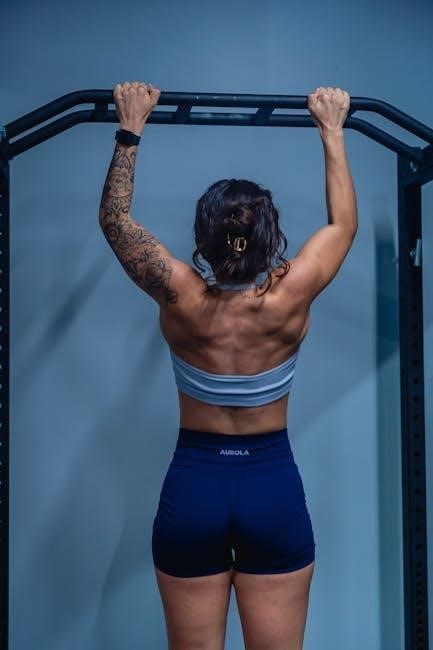

Daily life relies on strong arms and shoulders for tasks like lifting and pushing; incorporating upper-body exercises is crucial for overall fitness and well-being.
Many experience shoulder tension due to sedentary lifestyles, highlighting the need for targeted exercise and movement to alleviate discomfort and improve muscle function.
A comprehensive routine targeting shoulders, triceps, and biceps is essential for achieving a sculpted upper body and maximizing strength gains for functional movement.
Why Focus on Shoulder and Arm Strength?

Shoulder and arm strength are fundamental to a vast array of daily activities, extending far beyond aesthetic goals. Think about the simple act of reaching for an object, lifting groceries, or even maintaining good posture – all heavily reliant on a robust upper body. Neglecting these muscle groups can lead to functional limitations and increased risk of injury.
Furthermore, strengthening these areas directly combats the common issue of shoulder tension prevalent in today’s largely sedentary population. Prolonged sitting often results in muscle imbalances and tightness, contributing to pain and reduced range of motion. Targeted exercises can restore proper alignment and alleviate discomfort.
Investing in shoulder and arm strength also enhances performance in other exercises and sports, providing a stable base for movements requiring pushing, pulling, and rotational power. A well-developed upper body contributes to overall athleticism and physical resilience.
The Importance of a Well-Rounded Routine
Achieving optimal upper body development requires more than simply performing a few bicep curls. A truly effective routine must encompass exercises that target all muscle groups within the shoulders, triceps, and biceps, ensuring balanced strength and preventing imbalances. Focusing solely on “mirror muscles” can lead to postural issues and increased injury risk.
A comprehensive approach also incorporates exercises that address shoulder mobility and stability. The shoulder joint’s remarkable flexibility, while advantageous, also makes it susceptible to instability. Integrating mobility work enhances range of motion and protects against impingement or rotator cuff issues.
Finally, a well-rounded routine isn’t static; it evolves with your progress. Regularly varying exercises, adjusting weight, and incorporating different training techniques are crucial for continued gains and preventing plateaus.
Understanding Shoulder Anatomy & Function
The shoulder joint’s unique ball-and-socket structure grants exceptional flexibility, enabling a wide range of movements vital for daily activities and exercise performance.
The Shoulder Joint: Flexibility and Range of Motion
The shoulder joint is remarkably unique, distinguished as the most flexible joint within the human body. This incredible range of motion is a direct result of its ball-and-socket structure, allowing for movements in multiple planes – forward, backward, sideways, rotation inward and outward, and combinations thereof.
This exceptional flexibility is essential for a vast array of daily activities, from reaching overhead to simply rotating your arm. However, this same flexibility also makes the shoulder joint inherently susceptible to instability and potential injury. Maintaining and improving shoulder mobility through dedicated exercises and stretches is therefore paramount;
Exercises like arm swings and rows can significantly enhance this mobility, ensuring optimal function and reducing the risk of pain or limitations. Understanding this anatomical feature is key to designing effective and safe shoulder workouts.
Common Shoulder Issues & Pain Points
A significant number of adults currently experience tension and pain specifically within the shoulder region. This prevalent issue is often directly linked to modern lifestyles characterized by prolonged periods of sitting and a general lack of consistent, proper exercise and movement.
Insufficient muscle activation and limited range of motion contribute to stiffness and discomfort. Ignoring these early warning signs can lead to more chronic conditions, impacting daily activities and overall quality of life. Addressing these pain points proactively is crucial.
Fortunately, many shoulder issues can be improved through targeted stretches, like the cross-arm stretch, and strengthening exercises, both with and without weights. Prioritizing shoulder health is an investment in long-term well-being and functional movement.
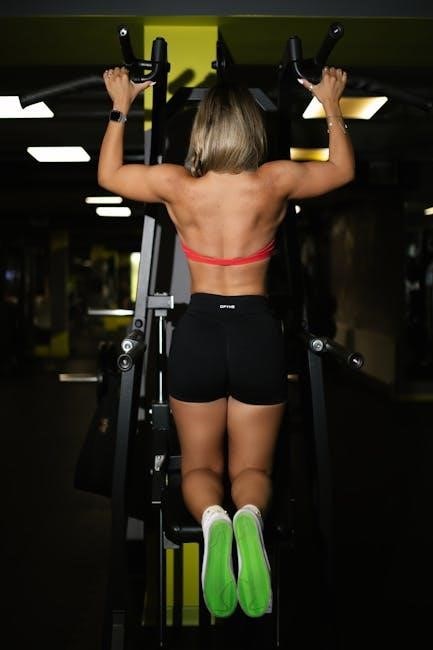
Essential Exercises for Shoulder Development
Sculpting strong shoulders requires a variety of exercises, including overhead presses, lateral and front raises, and rear delt flyes, for balanced development.
Don’t forget shoulder mobility exercises and stretches, like the cross-arm stretch, to improve range of motion and prevent injuries during workouts.
Overhead Press Variations
The overhead press is a cornerstone of shoulder development, building strength and mass in the deltoids. Several variations can enhance your routine and target different muscle fibers. The barbell overhead press is a classic, demanding stability and allowing for heavier loads, promoting significant strength gains.
Dumbbell overhead presses offer a greater range of motion and can help address muscle imbalances, as each side works independently. Arnold presses, a dumbbell variation, incorporate rotation, engaging more of the shoulder muscles. For a challenge, try seated dumbbell presses, which minimize lower body involvement, isolating the shoulders.
Push presses utilize a slight leg drive to initiate the movement, allowing you to lift heavier weight, focusing on explosive power. Remember proper form is paramount to avoid injury; maintain a braced core and controlled descent throughout each repetition.
Lateral Raises & Front Raises
Lateral and front raises are isolation exercises crucial for sculpting well-rounded shoulders, targeting the medial and anterior deltoids respectively. Dumbbell lateral raises focus on the medial deltoid, creating shoulder width. Maintain a slight bend in your elbows and lift with control, avoiding momentum.
Front raises, also typically performed with dumbbells, target the anterior deltoid, contributing to shoulder definition. Keep your core engaged and avoid swinging your body. Cable front raises provide constant tension throughout the movement, enhancing muscle activation.
Variations like plate raises offer a different stimulus. Focus on controlled movements and proper form to maximize effectiveness and prevent injury. Incorporate these exercises into your routine for balanced shoulder development.
Rear Delt Flyes
Rear delt flyes are essential for balanced shoulder development, targeting the often-neglected posterior deltoids. These exercises improve posture and counteract the effects of rounded shoulders common from prolonged sitting. Dumbbell rear delt flyes are a popular choice, performed by bending over or lying face down on an incline bench;
Focus on squeezing your shoulder blades together as you lift the weights, maintaining a slight bend in your elbows. Cable rear delt flyes offer constant tension throughout the range of motion. Reverse pec deck flyes provide a machine-based alternative.
Prioritize controlled movements and avoid using momentum. Incorporating rear delt flyes into your routine will contribute to a more aesthetically pleasing and functionally strong shoulder complex.
Shoulder Mobility Exercises & Stretches
Maintaining shoulder mobility is paramount for injury prevention and optimal performance. The shoulder joint’s flexibility allows for a wide range of movements, but can become restricted with inactivity. Arm swings – both forward and across the body – are excellent dynamic stretches to increase range of motion.
Rows with resistance bands or light dumbbells improve scapular movement and posture. Shoulder dislocations (using a light band or PVC pipe) gently open the shoulder joint. Don’t force the movement; listen to your body.
Regular stretching, like the cross-arm stretch, enhances flexibility and reduces tension. Prioritizing mobility work before and after workouts will significantly benefit shoulder health.
Cross-Arm Stretch for Shoulder Health
The cross-arm stretch is a simple yet effective technique to improve shoulder mobility and alleviate tension. Begin by extending one arm across your body, keeping it straight or with a slight bend. Use your opposite hand to gently pull the extended arm closer to your chest. You should feel a stretch in the rear deltoid and upper back.
Hold the stretch for 20-30 seconds, breathing deeply throughout. Avoid bouncing or forcing the movement. Repeat on the other side. This stretch is beneficial for individuals experiencing shoulder tightness or pain, particularly those with desk jobs.
Incorporating this stretch into your warm-up or cool-down routine can enhance shoulder health and prevent injuries.
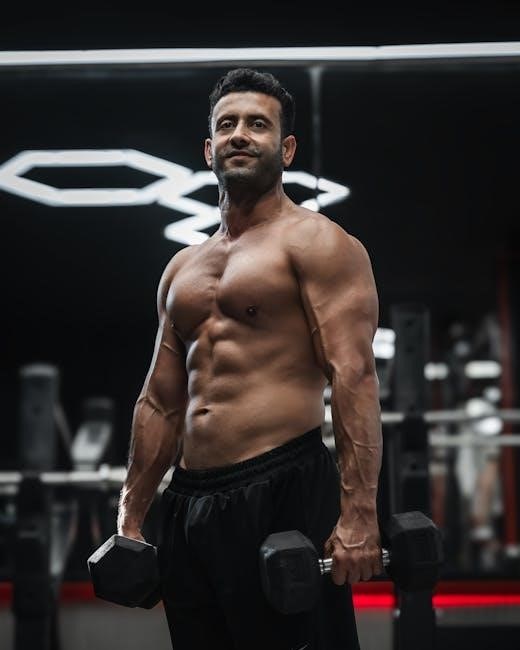
Bicep Exercises for Arm Strength
Sculpting impressive biceps doesn’t require complex gym equipment; effective workouts can be achieved at home with dumbbells, cables, or even bodyweight variations.
Barbell Curls
Barbell curls are a cornerstone exercise for building bicep mass and strength, effectively targeting the entire bicep muscle group. To perform a barbell curl, stand with your feet shoulder-width apart, holding a barbell with an underhand grip, slightly wider than shoulder-width.
Keep your elbows close to your sides throughout the movement and curl the weight upwards, focusing on contracting your biceps. Avoid swinging your body or using momentum to lift the weight; controlled movements are key.
Slowly lower the barbell back to the starting position, maintaining tension in your biceps. Begin with a manageable weight and gradually increase it as your strength improves. Proper form is paramount to prevent injuries and maximize results. Consider incorporating variations like close-grip or wide-grip barbell curls to target different areas of the biceps.
Dumbbell Curls (Hammer, Concentration, etc.)
Dumbbell curls offer versatility, allowing you to isolate and target the biceps from various angles. Hammer curls, performed with a neutral grip (palms facing each other), emphasize the brachialis and brachioradialis, contributing to overall arm thickness.
Concentration curls, executed while seated and bracing your elbow against your inner thigh, provide maximum isolation for the biceps. Alternating dumbbell curls allow for focused contraction on each arm individually.
Experiment with different dumbbell curl variations to challenge your muscles in new ways and prevent plateaus. Maintain controlled movements and focus on squeezing the biceps throughout each repetition. Adjust the weight to ensure proper form and avoid momentum. Dumbbells are excellent for addressing muscle imbalances.
Cable Bicep Curls
Cable bicep curls provide constant tension throughout the entire range of motion, unlike free weight exercises where gravity assists during the eccentric phase. This consistent resistance promotes greater muscle fiber recruitment and hypertrophy.
Utilizing a cable machine allows for a controlled and stable movement, minimizing the risk of cheating or using momentum. Various cable attachments, such as straight bars, rope handles, and EZ-curl bars, offer different grip options and target the biceps from slightly different angles.
Focus on maintaining a stable core and keeping your elbows tucked in close to your body during the exercise. Adjust the cable height to suit your preference and ensure a full range of motion. Cable curls are a fantastic way to finish your bicep workout!
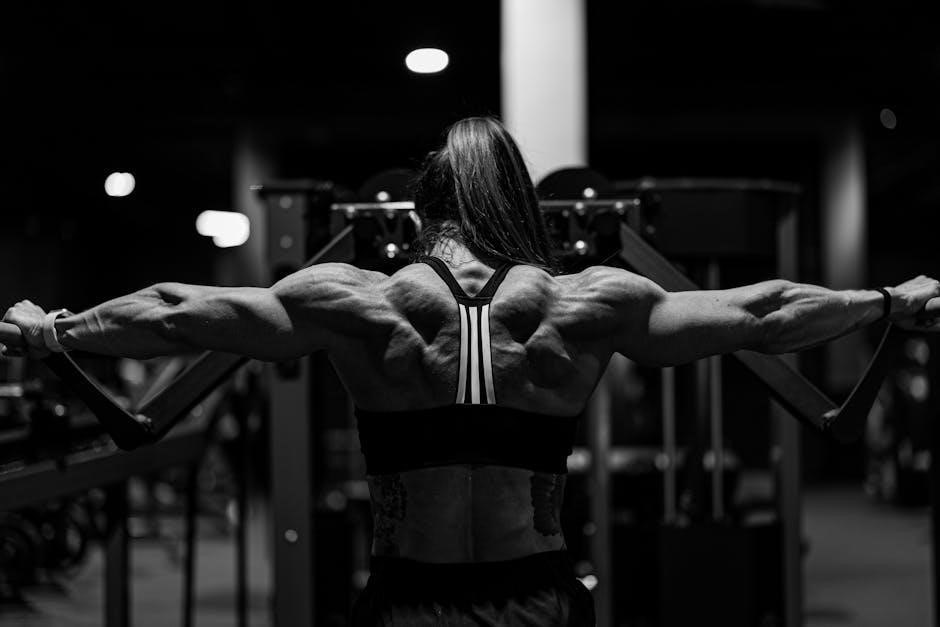
Tricep Exercises for Arm Definition
Sculpting defined arms requires dedicated tricep work, as they comprise two-thirds of upper arm mass; exercises like pushdowns and extensions are key.
Close-Grip Bench Press
The close-grip bench press is a compound exercise, powerfully targeting the triceps while also engaging the chest and shoulders for stabilization. To perform it, lie on a bench and grip the barbell with hands shoulder-width apart or slightly narrower. Lower the bar slowly to your mid-chest, keeping your elbows tucked in close to your body – this is crucial for maximizing tricep activation and minimizing shoulder stress.
Push the bar back up to the starting position, fully extending your arms and squeezing your triceps at the top of the movement. Maintaining proper form is paramount; avoid flaring your elbows, as this shifts the focus to the chest and increases the risk of injury. This exercise is excellent for building overall tricep mass and strength, contributing significantly to arm definition and power.
Remember to control the weight throughout the entire range of motion, and choose a weight that allows you to maintain good form for the desired number of repetitions.
Overhead Tricep Extensions
Overhead tricep extensions are a fantastic isolation exercise specifically designed to target all three heads of the triceps muscle. This exercise can be performed with a dumbbell, kettlebell, or cable machine, offering versatility in your workout routine. To execute, hold the weight with both hands and extend your arms straight overhead, keeping your elbows close to your head.
Slowly lower the weight behind your head by bending at the elbows, maintaining control throughout the movement. Focus on feeling the stretch in your triceps at the bottom of the motion. Then, powerfully extend your arms back to the starting position, squeezing your triceps at the peak contraction.
Maintaining a stable core and avoiding excessive arching of your back is essential for proper form and injury prevention.
Tricep Pushdowns
Tricep pushdowns are a highly effective exercise for isolating and strengthening the triceps muscles, contributing to greater arm definition; Typically performed using a cable machine with various attachments – rope, straight bar, or V-bar – this exercise allows for consistent tension throughout the range of motion.
Stand facing the cable machine, grip the attachment, and keep your elbows tucked close to your sides. Extend your arms downwards, pushing the attachment towards the floor while focusing on contracting your triceps. Maintain a slight bend in your elbows at the bottom to avoid locking out and potentially causing joint strain.
Slowly return to the starting position, resisting the pull of the cable. Proper form and controlled movements are key to maximizing results and preventing injury.

Workout Equipment Options
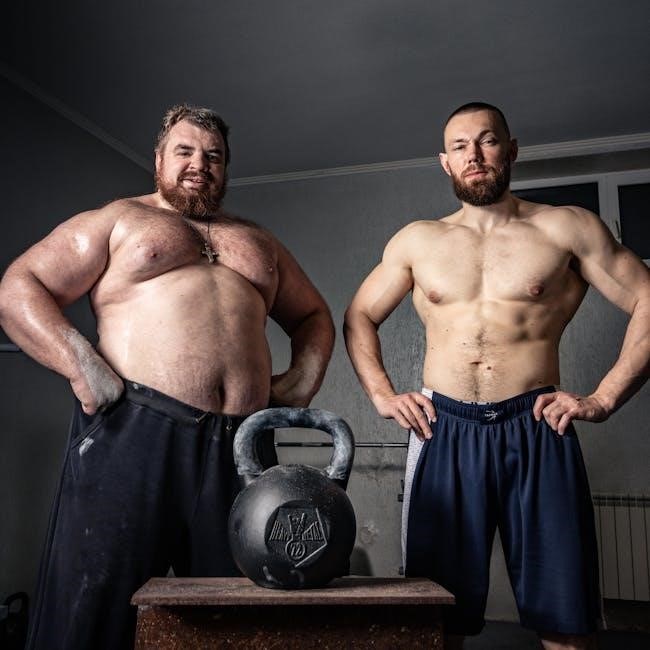
From dumbbells and kettlebells to resistance bands, diverse equipment allows for versatile shoulder and arm workouts, catering to all fitness levels and preferences.
You don’t need a fully equipped gym; effective arm workouts are achievable at home with minimal equipment, focusing on bodyweight and resistance bands.
Dumbbell Workouts
Dumbbells offer incredible versatility for shoulder and arm development, allowing for a wide range of exercises targeting different muscle groups. They are readily accessible and perfect for home workouts or supplementing gym routines.
For shoulders, consider overhead presses, both seated and standing, to build strength and definition. Lateral raises and front raises isolate the medial and anterior deltoids, respectively, contributing to broader shoulders. Don’t forget rear delt flyes to target the often-neglected posterior deltoids, improving shoulder balance and posture.
Bicep curls, performed with various grips (hammer, concentration, standard), effectively isolate the biceps for increased mass and strength. Dumbbell rows also engage the biceps as a secondary muscle group. For triceps, dumbbell kickbacks and skullcrushers provide excellent isolation, while close-grip dumbbell presses target the triceps with a compound movement.
Remember to select appropriate dumbbell weights to challenge your muscles without compromising form.
Kettlebell Arm Workouts
Kettlebells provide a dynamic and functional approach to arm and shoulder training, engaging stabilizing muscles alongside the primary movers. Building a strong upper body with kettlebells is incredibly beneficial for everyday activities and athletic performance.
For shoulders, kettlebell swings indirectly work the deltoids, while kettlebell halos improve shoulder mobility and stability. Kettlebell Turkish get-ups are a full-body exercise that heavily engages the shoulders, demanding control and strength.
Kettlebell curls offer a unique variation on traditional bicep curls, challenging grip strength and coordination. Kettlebell rows effectively target the back and biceps simultaneously. For triceps, kettlebell floor presses and overhead extensions provide effective isolation.
Focus on proper form and controlled movements to maximize benefits and minimize risk of injury when incorporating kettlebells into your routine.
Resistance Band Exercises for Shoulders
Resistance band exercises for shoulders are remarkably effective, accessible, and suitable for all fitness levels, offering a versatile training solution. They provide constant tension throughout the range of motion, enhancing muscle activation and promoting strength gains.
For shoulder development, band pull-aparts strengthen the rear deltoids and improve posture. Lateral raises with bands target the medial deltoids, contributing to shoulder width. Front raises work the anterior deltoids, completing a well-rounded shoulder routine.
External rotations with bands are excellent for rotator cuff strengthening and injury prevention. Internal rotations balance the shoulder joint, promoting stability. Bands can also be used for face pulls, further engaging the rear deltoids and upper back.
These exercises are easily incorporated into home workouts or used as warm-ups and cool-downs at the gym.
Bodyweight Exercises for Arms & Shoulders
Good news: achieving an effective arms and shoulders workout doesn’t require a fully equipped gym! Bodyweight exercises offer a convenient and accessible way to build strength and definition, utilizing your own weight as resistance.
Push-ups are a cornerstone exercise, targeting the chest, shoulders, and triceps. Variations like diamond push-ups emphasize the triceps, while wide-grip push-ups focus more on the chest and shoulders. Pike push-ups effectively target the shoulders.
For shoulders specifically, handstand push-ups (against a wall for safety) are a challenging but rewarding exercise. Plank variations, like shoulder taps, improve core stability and shoulder control.
Dips, using a chair or parallel bars, are excellent for tricep development. These exercises are perfect for home workouts or travel.
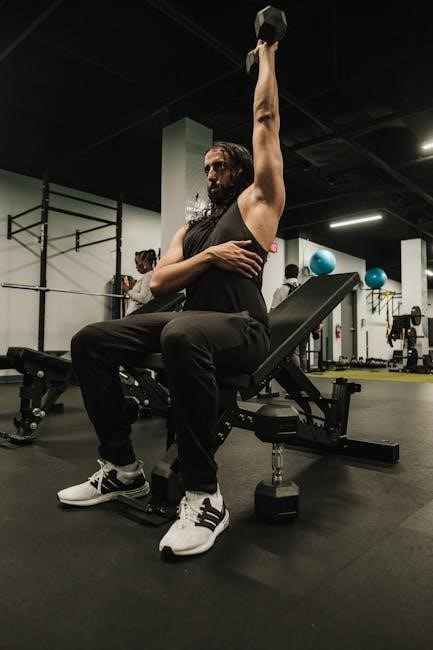
Creating Your Shoulder and Arm Workout PDF
Structuring a weekly routine with warm-up, cool-down, and progressive overload is key for consistent gains and preventing plateaus in your fitness journey.
Structuring a Weekly Routine
A balanced shoulder and arm workout PDF should incorporate dedicated training days, allowing for adequate muscle recovery between sessions. Consider a split routine, such as dedicating one day to shoulder-focused exercises and another to biceps and triceps. This prevents overtraining and maximizes muscle protein synthesis.
Frequency is crucial; aim for 2-3 upper body workouts per week. Beginners might start with two, while more advanced individuals can handle three, adjusting volume and intensity accordingly. Ensure each workout targets all major muscle groups within the shoulders and arms.
Prioritize proper form over lifting heavy weights. This minimizes the risk of injury and ensures effective muscle engagement. Vary exercises each week to challenge your muscles and prevent adaptation. Remember to listen to your body and adjust the routine based on your individual needs and recovery rate.
Warm-up and Cool-down Essentials
Before each shoulder and arm workout, a dynamic warm-up is vital. Include arm circles, shoulder rotations, and light cardio like jumping jacks to increase blood flow and prepare muscles for exertion. This enhances performance and reduces injury risk.
Focus on shoulder mobility exercises, such as cross-arm stretches and arm swings, to improve range of motion and flexibility. A proper warm-up should last 5-10 minutes, gradually increasing intensity.
Following your workout, a cool-down is equally important. Static stretches, holding each stretch for 20-30 seconds, help improve flexibility and reduce muscle soreness. Include stretches targeting the shoulders, biceps, and triceps. A cool-down aids in recovery and prevents stiffness.
Progressive Overload & Exercise Variation
To continually challenge your muscles and promote growth, progressive overload is key. This involves gradually increasing the weight, repetitions, or sets over time. Don’t plateau – consistently push your limits safely.
Exercise variation is equally crucial. Switching between dumbbell curls, hammer curls, and concentration curls prevents adaptation and targets muscles from different angles. Similarly, vary overhead press variations and rear delt flyes.
Introduce new exercises periodically to stimulate muscle fibers and prevent boredom. Consider incorporating resistance band exercises or kettlebell workouts for added challenge. Remember to prioritize proper form over lifting heavy weight, ensuring safe and effective progression.
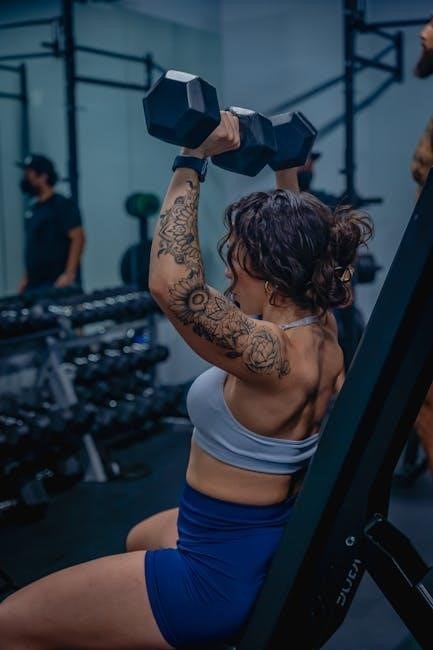
Sample Workout Plans
Tailored plans exist for beginner, intermediate, and advanced fitness levels, offering structured routines to build shoulder and arm strength effectively and safely.
Beginner Shoulder & Arm Workout
This introductory plan focuses on building a foundation of strength and proper form, utilizing dumbbells and bodyweight exercises for accessibility. Begin with a 5-minute warm-up including arm circles and shoulder rotations. Perform 3 sets of 10-12 repetitions for each exercise, resting 60 seconds between sets.
Exercises include: Dumbbell Shoulder Press (light weight), Dumbbell Bicep Curls, Dumbbell Tricep Extensions (overhead), and Lateral Raises (very light weight). Incorporate bodyweight exercises like Push-ups (modified on knees if needed) and Plank (hold for 30 seconds).
Focus on controlled movements and maintaining good posture throughout each exercise. Prioritize form over weight to prevent injuries. Conclude with a 5-minute cool-down, holding static stretches for each muscle group worked. This routine should be performed 2-3 times per week, with rest days in between.
Intermediate Shoulder & Arm Workout
This plan builds upon the beginner routine, increasing intensity and introducing more challenging exercises. Begin with a dynamic 5-minute warm-up, including arm swings and torso twists. Perform 3-4 sets of 8-12 repetitions for each exercise, resting 45-60 seconds between sets;
Exercises include: Dumbbell Shoulder Press, Front Raises, Hammer Curls, Concentration Curls, Close-Grip Bench Press, and Tricep Pushdowns (using resistance bands or cables). Introduce Kettlebell exercises like Kettlebell Swings and Turkish Get-Ups (with light weight).
Focus on maintaining proper form while increasing the weight or resistance. Incorporate supersets (performing two exercises back-to-back) to enhance workout efficiency. Finish with a 5-minute cool-down, focusing on static stretches. Perform this routine 3 times per week, allowing for adequate recovery.
Advanced Shoulder & Arm Workout
This demanding routine is for experienced lifters seeking significant gains in strength and definition. Begin with a thorough 10-minute dynamic warm-up, including mobility drills. Perform 4-5 sets of 6-10 repetitions for each exercise, utilizing heavier weights and shorter rest periods (30-45 seconds).
Exercises include: Barbell Overhead Press, Arnold Press, Rear Delt Flyes (with heavier dumbbells), Barbell Curls, Preacher Curls, Skullcrushers, and Weighted Tricep Dips. Integrate advanced kettlebell flows and complex movements.
Employ techniques like drop sets and forced reps to push beyond failure. Prioritize progressive overload, consistently increasing weight or resistance. Conclude with a 5-7 minute static stretching cool-down. This routine should be performed 2-3 times weekly, with ample recovery time.